
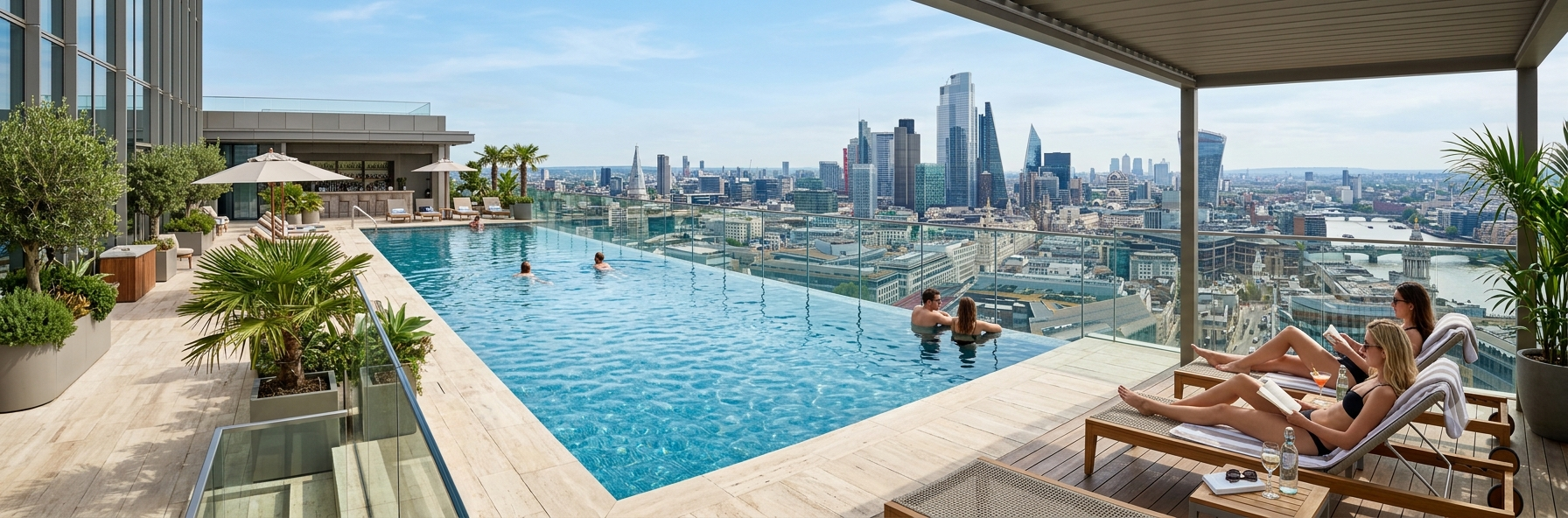
Transform your unused terrace into a stunning recreational space with professional Rooftop Swimming Pool Construction in Delhi. From private villas to hotels and commercial rooftops, we plan, engineer, and build pools that are safe, durable, and visually striking.
Who is the Best Rooftop Swimming Pool Builder in Delhi?
Delhi’s dense construction landscape means ground-level space is often limited, making rooftops one of the most valuable areas for adding a swimming pool. A professional Rooftop Swimming Pool Contractor in Delhi provides complete, end-to-end solutions — from structural feasibility checks to design, waterproofing, filtration, and final finishing.
Rooftop pool construction is not the same as building a pool on solid ground. It requires careful load assessment, waterproofing strategy, Rooftop Swimming Pool Builder Delhiand coordination with structural engineers before a single brick is laid. Every project we undertake begins with this due diligence, ensuring the pool is both beautiful and structurally sound.
Our services cover initial consultation, feasibility assessment, design, structural coordination, waterproofing, filtration, lighting, finishing, and commissioning — a complete package for homeowners, developers, hotels, and commercial property owners across Delhi NCR.
What Is a Rooftop Swimming Pool?
A rooftop swimming pool is a pool constructed on the terrace, upper floor, or roof deck of a building rather than at ground level. Depending on the available area and the building’s load-bearing capacity, it can be designed as a full swimming pool, a plunge pool, a leisure pool, or a compact wellness pool.
Because rooftop construction adds significant combined weight — from the pool shell, water, equipment, finishes, and users — a qualified structural engineer must assess the existing building before any design is finalized.
Why Are Rooftop Pools in High Demand in Delhi?
With rising land costs and shrinking plot sizes across South Delhi, Gurugram-adjacent areas, and Delhi’s farmhouse belt, rooftop pools have become a practical way to add premium recreational space without needing additional land. They’re increasingly popular among:
-
- Independent houses and builder floors with limited ground space
-
- Farmhouses looking to add a leisure feature on an elevated deck
-
- Boutique hotels and guesthouses
-
- Rooftop restaurants, clubs, and banquet spaces
-
- Apartment and residential complexes upgrading shared amenities
-
- Commercial and hospitality developments
A well-executed rooftop pool offers:
-
- Efficient use of otherwise unused terrace space
-
- Greater privacy compared to a ground-level pool
-
- Attractive skyline and city views
-
- A premium recreational feature that adds property value
-
- Flexibility for compact plunge or lap pool formats
-
- Seamless integration with rooftop lounges and landscaped decks
How Is a Rooftop Swimming Pool Constructed Safely?
Rooftop pool construction in Delhi follows a carefully coordinated, multi-stage process. The first and most important step is determining whether the building’s structure can safely support the proposed pool — this should never be assumed based on available terrace space alone.
A responsible rooftop pool contractor evaluates:
-
- Structural load-bearing capacity of the building
-
- Pool dimensions, shape, and water depth
-
- Lightweight construction methods where needed (FRP, modular shells)
-
- Waterproofing and leak-prevention systems
-
- Drainage and overflow management
-
- Equipment room placement and accessibility
-
- Plumbing and electrical safety
-
- Wind exposure and rooftop environmental conditions
-
- Safe pool-side access and railings
-
- Local building approvals and applicable regulations
The final construction approach should always be signed off by qualified structural and architectural professionals before work begins.
How Much Weight Does a Rooftop Pool Actually Add?
One cubic metre of water weighs roughly 1,000 kg. That means even a modest rooftop pool measuring 6m x 3m x 1.2m holds around 21,600 litres of water, adding close to 21-22 tonnes to the roof once the pool shell, tiling, deck, and equipment are factored in. This is why load calculation isn’t a formality — it’s the single factor that determines whether a rooftop pool project can go ahead at all, and at what size and depth.
For buildings originally designed without a pool in mind, this often means the structural engineer will recommend a smaller footprint, a shallower depth, additional column or beam reinforcement, or a lightweight construction method to keep the added load within safe limits.
Choosing the Right Pool Shell for a Delhi Rooftop
The type of pool shell you choose has a direct impact on the load transferred to the building, the construction timeline, and long-term durability. The three common options used for rooftop projects in Delhi are:
RCC / Gunite Shell — A cast-in-place reinforced concrete shell remains the most durable and design-flexible option, allowing custom shapes, depths, and integrated features like infinity edges or spa sections. It’s heavier than prefabricated alternatives, so it works best where the structural assessment confirms adequate load capacity.
FRP (Fibreglass) Shell — A pre-moulded fibreglass shell is significantly lighter than an RCC pool and faster to install, making it a practical choice for rooftops with limited load-bearing capacity or tighter construction timelines. The trade-off is less flexibility in size and shape, since shells come in fixed dimensions.
Modular / Panel-Based Pools — Built from lightweight modular panels assembled on-site, these are another option for rooftops where minimizing dead load is a priority, particularly for retrofitting a pool onto an existing structure that wasn’t originally designed for one.
For most rooftop projects in Delhi, especially on existing buildings rather than pools planned during original construction, FRP or modular systems are often recommended once the structural assessment is complete, while RCC remains the choice when the building can safely support it and full design customization is a priority.
Our Rooftop Pool Construction Process in Delhi
1. Site Assessment Across Delhi Properties
Our team visits the site, whether it’s a builder floor in South Delhi, a farmhouse in Chhatarpur or Bijwasan, an independent house in Vasant Kunj, Greater Kailash, or Dwarka, or a commercial rooftop in Connaught Place or Saket. We evaluate available terrace space, the age and condition of the structure, accessibility for material transport (a key factor in Delhi’s older, narrower colonies), drainage patterns, and surrounding architecture.
2. Concept and Pool Design Suited to Delhi Homes
We prepare a customized layout based on the property type and intended use — a compact plunge pool for a builder floor in areas like Anand Niketan or Panchsheel Park, or a larger leisure pool for a farmhouse with more terrace area in Chhatarpur or Mehrauli. Pool shape, depth, deck space, and equipment room placement are all planned around Delhi’s typical rooftop layouts, water tank positioning, and existing overhead structures.
3. Structural Coordination and Local Approvals
Delhi’s building bylaws, largely governed by the MCD (Municipal Corporation of Delhi) and, in select areas, the NDMC or DDA, require structural clearance before major additions like a rooftop pool. We coordinate with structural engineers to assess the building’s load-bearing capacity, especially important for older constructions common in colonies like Defence Colony, Model Town, or Punjabi Bagh, and help ensure the design aligns with applicable local regulations.
4. Hydraulic System Planning for Delhi’s Climate
Delhi experiences hot, dry summers, a humid monsoon season, and cold winters, all of which affect pump sizing, filtration capacity, and circulation planning. We design the hydraulic system to handle heavy monsoon rainfall and runoff (June to September) as well as high summer evaporation rates, ensuring the pool performs reliably through Delhi’s full seasonal cycle.
5. Waterproofing Built for Delhi’s Monsoon and Temperature Swings
Delhi’s monsoon season and wide temperature variation between summer and winter place extra demand on waterproofing systems. We apply multi-layer, monsoon-resistant waterproofing before installing the final finish, whether tiles, mosaics, or other pool-compatible surfaces, to prevent seepage into the floors below, a critical concern for rooftop pools on occupied buildings.
6. Testing and Commissioning
Before handover, we pressure-test all pipelines, run the pool shell through pond testing to check for leaks, and verify filtration and equipment performance under actual operating conditions, an important step given Delhi’s variable water pressure and power supply across different localities.
How Much Does Rooftop Pool Construction Cost in Delhi?
Rooftop pool costs are generally higher than ground-level pools of the same size, since they involve additional structural work, lightweight construction materials, and more complex site logistics. As a rough guide for Delhi NCR:
-
- Compact rooftop plunge pool (around 10 x 15 ft): typically starts from ₹9-14 lakhs depending on shell type and finishes
-
- Standard rooftop pool (around 15 x 25 ft): typically falls in the ₹18-30 lakhs range
-
- FRP/modular rooftop pool (compact sizes, faster installation): often ₹3-6 lakhs including installation, depending on size and specification
-
- Commercial/hotel rooftop pools: usually start upward of ₹60 lakhs depending on size, depth, and features
These figures are indicative only. The final cost depends on structural reinforcement requirements, shell material (RCC vs FRP vs modular), waterproofing specification, filtration and equipment selection, and finish choices such as tiles or mosaics. A site visit and structural assessment are necessary before an accurate quotation can be shared.
Factors that influence rooftop pool cost in Delhi:
-
- Structural reinforcement needed to support the additional load
-
- Pool shell material and construction method
-
- Depth and overall water volume
-
- Accessibility of the rooftop for material and equipment transport
-
- Waterproofing system specification
-
- Filtration, pump, and dosing equipment selected
-
- Finish choice — tiles, mosaic, or plaster
-
- Additional features like lighting, spa sections, or automation
How Long Does Rooftop Pool Construction Take in Delhi?
A typical residential rooftop pool project takes about 8-14 weeks from site assessment to final commissioning, depending on the shell type, size, and complexity of structural work involved. FRP and modular pools generally install faster than cast-in-place RCC shells, since the shell arrives pre-fabricated and requires less on-site curing time.
Commercial rooftop pools for hotels or hospitality projects typically take longer, often 4-6 months, due to the larger scale, additional approvals, and more extensive filtration and safety systems involved.
Common factors that can extend the timeline include the monsoon season (June-September), delays in structural approvals, and changes made to the design scope after construction has started. Planning the project outside the peak monsoon window where possible helps keep waterproofing and curing stages on schedule.
Customized Rooftop Pool Design Options
Every rooftop in Delhi comes with its own architectural constraints and possibilities. We offer flexible design options, including:
-
- Compact rooftop plunge pools
-
- Terrace lap pools
-
- Rooftop infinity-edge pools (where structure and elevation allow)
-
- Skimmer and overflow systems
-
- Integrated spa or Jacuzzi sections
-
- Underwater LED lighting
-
- Steps, benches, and shallow relaxation ledges
-
- Automatic filtration and dosing systems
-
- Heating and temperature-control provisions
-
- Pool decks, outdoor showers, and surrounding landscaping
Pool Filtration and Water Treatment
A reliable filtration and water-treatment system keeps a rooftop pool clean, clear, and safe to use year-round. Depending on the design, this may include circulation pumps, sand or cartridge filters, skimmers, and overflow channels.
Optional water-treatment upgrades include:
-
- Automated chemical dosing systems
-
- Saltwater chlorination
-
- UV-based water treatment
-
- pH monitoring and control
-
- Energy-efficient circulation pumps
-
- Automatic water-level control
-
- Robotic or manual pool cleaning systems
Maintenance Schedule for a Rooftop Pool
A properly designed and constructed rooftop pool doesn’t require excessive upkeep, but it does need consistent attention, particularly given Delhi’s dust levels, summer evaporation, and monsoon runoff. A general maintenance routine looks like this:
-
- Daily — Check water chemistry (pH between 7.2-7.6, free chlorine between 1-3 ppm); this can be automated with a dosing system.
-
- Weekly — Brush walls and floor to prevent algae buildup, skim debris, and check skimmer baskets, especially important during Delhi’s dusty summer months.
-
- Monthly — Backwash the filter once pressure rises noticeably above the clean baseline, inspect the pump strainer basket, and check chemical stock levels.
-
- Before and after monsoon — Inspect drainage and overflow paths, check for silt accumulation, and verify that waterproofed joints and the pool deck show no signs of seepage.
-
- Annually — Inspect seals, O-rings, and pipework connections, check tile grout and waterproofing for wear, and service the pump and filtration equipment.
An Annual Maintenance Contract (AMC) is a practical option for rooftop pools, since it keeps equipment servicing and water testing on a consistent schedule without relying on the homeowner to track it manually.
Rooftop Pool Approvals and Permits in Delhi
Because a rooftop pool adds significant load to an existing structure, it’s treated differently from a ground-level pool under Delhi’s building regulations. Depending on the property and locality, approvals may involve the MCD (Municipal Corporation of Delhi), NDMC, or DDA, particularly when the pool adds load beyond what the sanctioned building plan accounted for.
For hotels, clubs, housing societies, and other commercial or institutional properties, additional compliance under the National Building Code (NBC) and local health authority inspection is generally required before the pool can be opened for use.
It’s advisable to confirm the specific approval requirements for your property with the relevant local authority before construction begins. A qualified rooftop pool contractor can guide you through the documentation needed and help ensure the project stays compliant from the design stage onward.
Questions to Ask Before Hiring a Rooftop Pool Contractor in Delhi
Because rooftop construction carries more risk than a ground-level pool, it’s worth vetting a contractor carefully before signing on:
-
- Has the contractor conducted structural assessments for rooftop pools before, and can they explain how load capacity is calculated?
-
- What waterproofing system will be used, and is it rated for the specific demands of a rooftop installation on an occupied building?
-
- Is the pricing based on a detailed, itemized quotation, or a vague lump-sum figure?
-
- What is the defect liability period offered after handover, and what does it cover?
-
- Can the contractor share references or completed rooftop projects you can see or speak to the owners about?
-
- Who is responsible if a leak or structural issue appears after handover?
A contractor who answers these questions clearly and specifically is generally a safer choice than one who gives vague reassurances. Be cautious of quotes significantly lower than others for the same scope — on rooftop projects, this is often where waterproofing specification or structural reinforcement gets quietly cut.
Repairing or Renovating an Existing Rooftop Pool
If you already have a rooftop pool that’s leaking, cracking, or showing signs of water seepage into the floor below, it doesn’t necessarily mean starting over. Renovation typically involves identifying the source of the leak, repairing structural cracks with appropriate sealants, reapplying waterproofing membranes, and replacing damaged tiles or plaster. Because seepage from a rooftop pool can affect the ceiling and walls of the floor below, addressing leaks early is important, both for the pool’s longevity and to prevent damage to the rest of the building.
A proper assessment of the existing structure and waterproofing condition should always precede any renovation work, so the repair addresses the actual cause rather than just the visible symptom.
Why Choose a Professional Rooftop Pool Contractor in Delhi?
Rooftop pools are technically demanding projects, and mistakes at the design or construction stage can lead to leakage, structural stress, poor circulation, or expensive long-term maintenance. Working with an experienced rooftop pool builder ensures:
-
- A structural assessment before any construction begins
-
- Correctly engineered waterproofing suited to Delhi’s climate
-
- Efficient filtration and hydraulic planning
-
- Quality material selection and finishing
-
- Adherence to safety standards and local approvals
-
- A pool built to perform reliably for years, not just look good on handover day
Frequently Asked Questions
How much does rooftop swimming pool construction cost in Delhi?
Costs depend on the pool’s size, depth, structural reinforcement needs, filtration equipment, waterproofing system, and chosen finishes. A site visit is required for an accurate quotation.
Does every terrace in Delhi support a rooftop pool?
No. Feasibility depends on the building’s structural design, age, and load-bearing capacity. A professional structural assessment is essential before any construction is planned.
How long does rooftop pool construction take?
Timelines vary based on pool size, design complexity, structural work required, and site conditions. A detailed schedule is shared after the design is finalized.
Which type of pool works best for a small Delhi rooftop?
A compact plunge pool or shallow leisure pool is usually the best fit for limited terrace space. Final dimensions must be based on the structural capacity of the building.
How is rooftop pool leakage prevented?
Leakage risk is minimized through proper shell construction, joint treatment, compatible waterproofing membranes, pipeline pressure testing, and pond testing before the final finish is applied.
Can a rooftop pool be built on an older building?
It’s possible in some cases, but older structures need a thorough structural evaluation first. Lightweight pool construction methods may be recommended if the existing structure has limited load capacity.
Which is better for a rooftop: RCC or FRP (fibreglass) pool?
RCC pools offer full design flexibility and long-term durability but add more weight to the structure. FRP pools Manufacturer are lighter and faster to install, making them a common choice when the structural assessment shows limited load capacity or when project timelines are tight. The right choice depends on what the building can safely support.
How much weight does a rooftop pool add to a building?
A rooftop pool measuring roughly 6m x 3m x 1.2m holds about 21,600 litres of water, which weighs close to 21-22 tonnes on its own, before accounting for the shell, tiling, and equipment. This is why a structural load assessment is mandatory before any rooftop pool design is finalized.
Do I need any permits or approvals to build a rooftop pool in Delhi?
Yes, in most cases. Because a rooftop pool adds load beyond the original sanctioned building plan, approvals from the MCD, NDMC, or DDA (depending on the property’s location) are typically required. Commercial and institutional properties also need to meet National Building Code requirements and local health authority inspections.
What is a fair advance payment for a rooftop pool contractor?
An advance of around 20-25% of the total contract value for mobilization and material procurement is standard practice. Advance payments significantly higher than this can indicate financial risk, and a reliable contractor will tie the remaining payments to verified project milestones.
Premium Rooftop Swimming Pool Construction in Delhi
Whether it’s a private residence, farmhouse, boutique hotel, or commercial rooftop, our team manages every stage of the project — structural coordination, waterproofing, filtration, and premium finishing — to deliver a rooftop pool that’s safe, durable, and built to last.
Get in touch for a free site assessment and design consultation for your rooftop swimming pool project in Delhi.